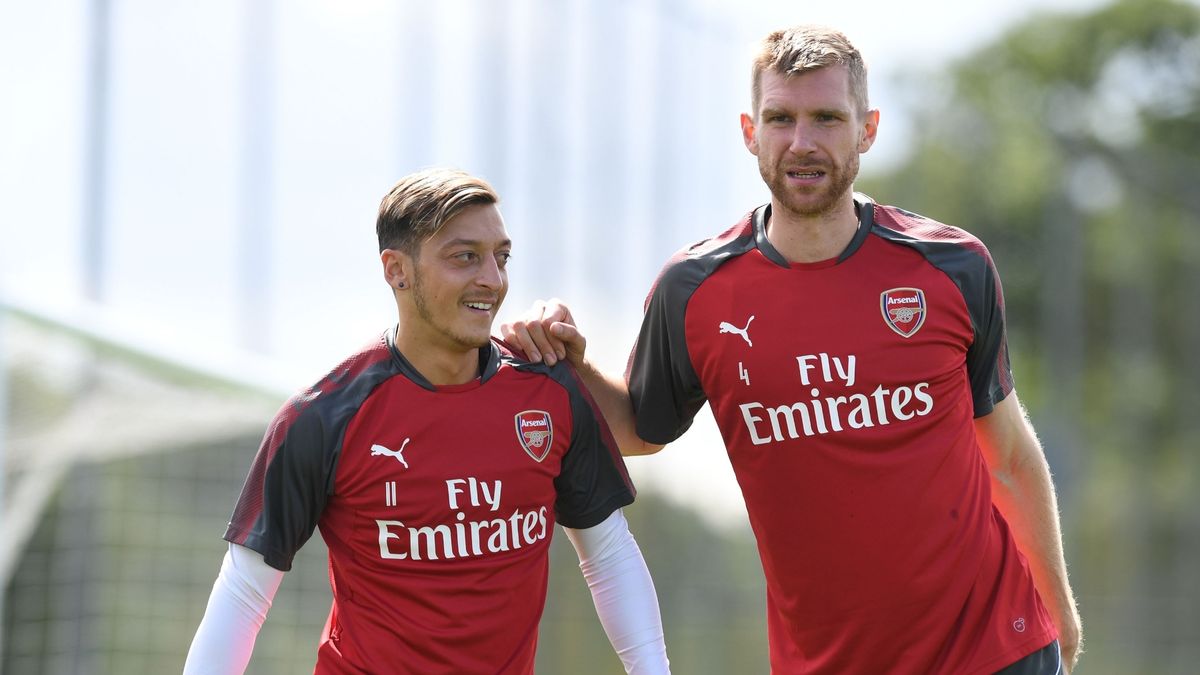
Per Mertesacker's Stature: Why the German Giant Exits Arsenal
For nearly 15 years, the towering figure of Per Mertesacker has been an indelible part of Arsenal's fabric. From his commanding presence at centre-back to his pivotal role in shaping the club's academy, the German giant leaves behind an extraordinary legacy. His departure at the end of the current season marks the closing of a significant chapter, not just for the club, but for a man whose Per Mertesacker: 198cm of Arsenal Leadership & Legacy extended far beyond his impressive physical dimensions. This article delves into the reasons behind his exit, the impact he leaves, and what it means for the future.
The End of an Era: Player, Leader, Mentor
When Per Mertesacker arrived at Arsenal in the summer of 2011, alongside Mikel Arteta, few could have predicted the profound influence he would wield. The two instantly forged a bond, famously performing their initiation songs together – Mertesacker launching into DJ Otzi’s Hey Baby with a bread roll microphone, while Arteta gave his rendition of the Macarena. This lighthearted beginning belied a serious intent to reshape the club's culture.
As a player, Mertesacker's Per Mertesacker Größe (height) of 198 cm (6'5") made him a formidable presence in the defensive line. Nicknamed "the Defence Pole" (die Abwehrlatte) by German tabloids early in his career and affectionately known as "the BFG" (Big F*cking German) by Arsenal fans, an allusion to Roald Dahl’s character, his stature was both literal and metaphorical. He wasn't the quickest, but his exceptional positional sense, leadership, and calm demeanor were invaluable. He was also renowned for an impeccable disciplinary record, famously going 31 Bundesliga games without a booking.
Together with Arteta, Mertesacker was instrumental in reshaping the dressing-room ethos, helping Arsenal end a nine-year wait for silverware with the FA Cup triumph in the 2013-14 season. This period laid the groundwork for his eventual transition. Upon retirement, both he and Arteta were entrusted with leading critical aspects of the club: Mertesacker as academy manager and Arteta as first-team manager.
Beyond the "Big F***ing German": Mertesacker's Off-Pitch Impact
Mertesacker's commitment to Arsenal continued unabated in his post-playing career. For eight years, he meticulously managed the club's academy, a role he approached with the same dedication and strategic thinking that characterized his playing days. His aim was to nurture the next generation of Arsenal talent, instilling the club's values and ambition into young players. Mikel Arteta himself attested to this, stating, “He’s someone that transmits the values of this football club, its ambition, and everything that is related to it in the best manner.”
The importance of a successful academy in modern football cannot be overstated, especially in an era of stringent financial regulations. Developing homegrown talent offers a sustainable pathway to success, providing both quality players and significant transfer revenue when appropriate. Mertesacker’s tenure oversaw the progression of numerous talents, ensuring a steady stream of prospects for the senior squad. His physical Per Mertesacker Größe might have earned him the "BFG" moniker, but off the pitch, it was his intellectual and emotional stature that truly made him a giant in his role.
However, running a top-tier academy is a demanding endeavor, constantly requiring innovation and adaptation. While Mertesacker achieved much, there has been a growing sentiment within Arsenal over recent months that fresh ideas might be beneficial for the academy's future. The previous sporting director, Edu, had already begun contemplating ways to elevate the academy's level before his departure, and subsequent reviews have identified areas for potential improvement.
Navigating Change: Why the Giant Departs
News of Mertesacker's decision to step down, while significant, wasn't entirely a bolt from the blue for those close to Arsenal. Several factors appear to have converged, leading to this natural, albeit impactful, transition:
- Natural Churn and Stint Length: Eight years in a senior role at a demanding club like Arsenal, following seven years as a player, represents a remarkable 15-year tenure. This is a distinguished feat in modern football, where longevity in a single role is increasingly rare. A certain amount of natural churn is expected and often healthy for any organization.
- Lack of Clear Progression Pathway: Having started his post-playing career in such a senior management position, the avenues for Mertesacker to progress further within Arsenal became limited. Last year, he was reportedly not considered for either the sporting director or technical director roles, which went to Andrea Berta and James Ellis, respectively. This lack of an obvious upward trajectory likely played a role in his decision.
- Evolving Club Structure: The implementation of a new technical-director model significantly altered Arsenal’s reporting structure. Such organizational shifts can impact existing roles and reporting lines, potentially diminishing the scope or influence of certain positions, including that of the academy manager.
- Desire for Fresh Ideas: As noted, Arsenal have been actively contemplating injecting new perspectives into their academy leadership. The football landscape is constantly evolving, and even successful programs benefit from periodic reviews and new strategic input to stay ahead.
- Financial Considerations: While Mertesacker's impact was immense, the reference context suggests his salary was "good," which might have restricted Arsenal’s ability to allocate resources in other areas or restructure certain departments. In a financially regulated environment, every decision has budgetary implications.
Ultimately, Mertesacker's departure seems to be a confluence of these factors – a mutual recognition that after a long and fruitful partnership, it might be time for both parties to embark on new paths. For more on his farewell, you can read about The BFG's Farewell: Per Mertesacker Leaves Arsenal.
The Future of Arsenal's Academy and Mertesacker's Next Chapter
The challenge for Arsenal now is to find a successor who can build upon Mertesacker’s strong foundations while bringing fresh perspectives and innovative strategies to the academy. The club's continued review of academy operations underscores their commitment to optimizing this crucial department. The next leader will need to navigate the delicate balance of youth development, talent identification, and integration into the first-team environment, all while adhering to the club's evolving footballing philosophy.
As for Per Mertesacker himself, his future remains an intriguing prospect. With his vast experience as a player at the highest level, a World Cup winner, and eight years in a senior management role, his insights and leadership qualities will undoubtedly be highly sought after. Whether he pursues another role in football administration, coaching, or perhaps a different venture altogether, his journey serves as a powerful testament to the multifaceted nature of a modern footballer's career.
His deep understanding of football at every level, coupled with his reputation for integrity and astute decision-making, positions him well for whatever challenge he chooses next. The impact of his Per Mertesacker Größe, both physical and in terms of influence, will resonate for years to come within the walls of Arsenal and beyond.
Per Mertesacker’s exit from Arsenal marks the end of an era defined by dedication, leadership, and significant contribution. From his towering presence on the pitch to his instrumental role in shaping the club’s future talents, the German giant has left an indelible mark. While the reasons for his departure are multifaceted, it is a natural progression for a club and an individual seeking new horizons. Arsenal will now look to a new chapter for its academy, while Mertesacker embarks on his next challenge, leaving behind a legacy that exemplifies professionalism and passion for the beautiful game.